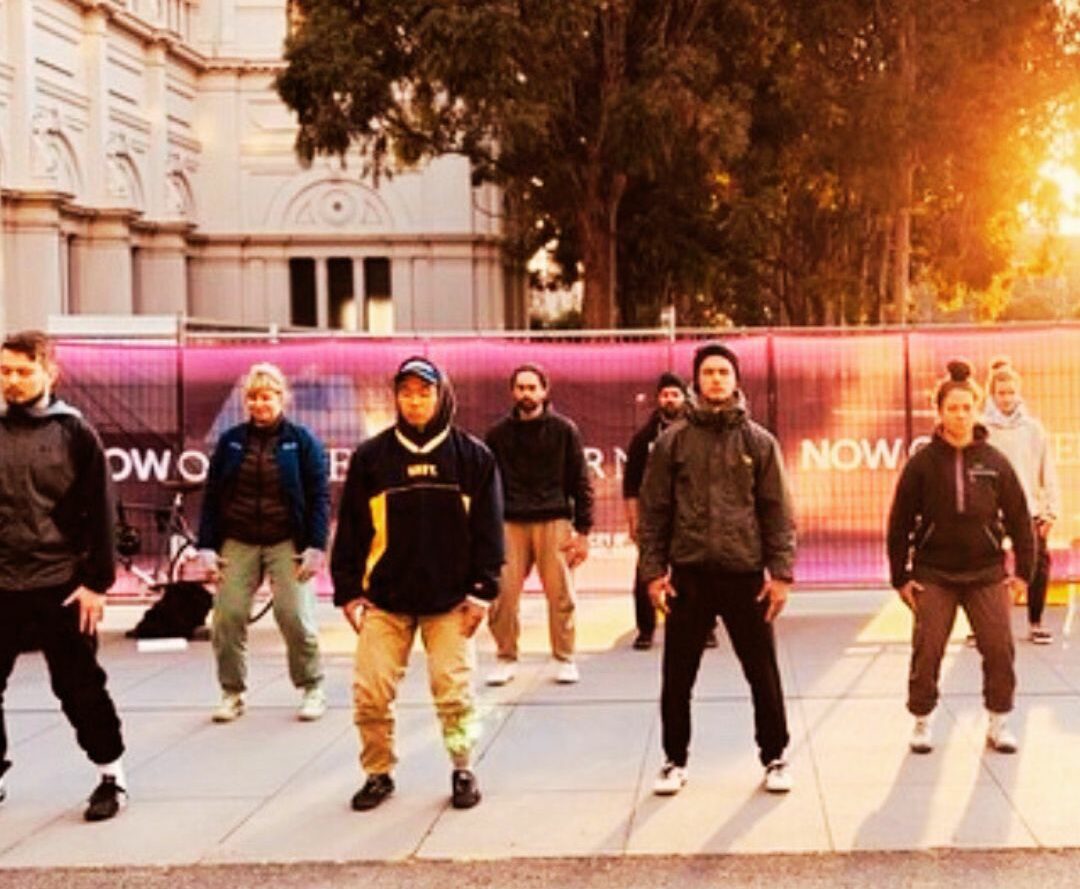
What is the Movement Practice?
First of all, I would like to make it clear that this article is an opinion piece. Everything that is exposed is nothing more than a set of reflections from our perspective on the field of Movement practice.
We do not have the absolute truth, we only try to collect a series of essential ideas of our philosophy so that they can serve as a guide for you.
Read with respect, but don’t forget to reflect. Explore the art of thinking to find your own philosophy. Watch with a smile every step of the way, and never abandon your beginner’s mind.
Ah! It is worth warning you that this is a long article, and sometimes a bit dense because of its depth. It might be interesting to keep a notebook or your diary nearby to jot down the ideas that resonate with you or that you want to investigate, and allow yourself enough time, in a quiet environment, to understand and reflect on what you think is necessary.
Let’s get started.
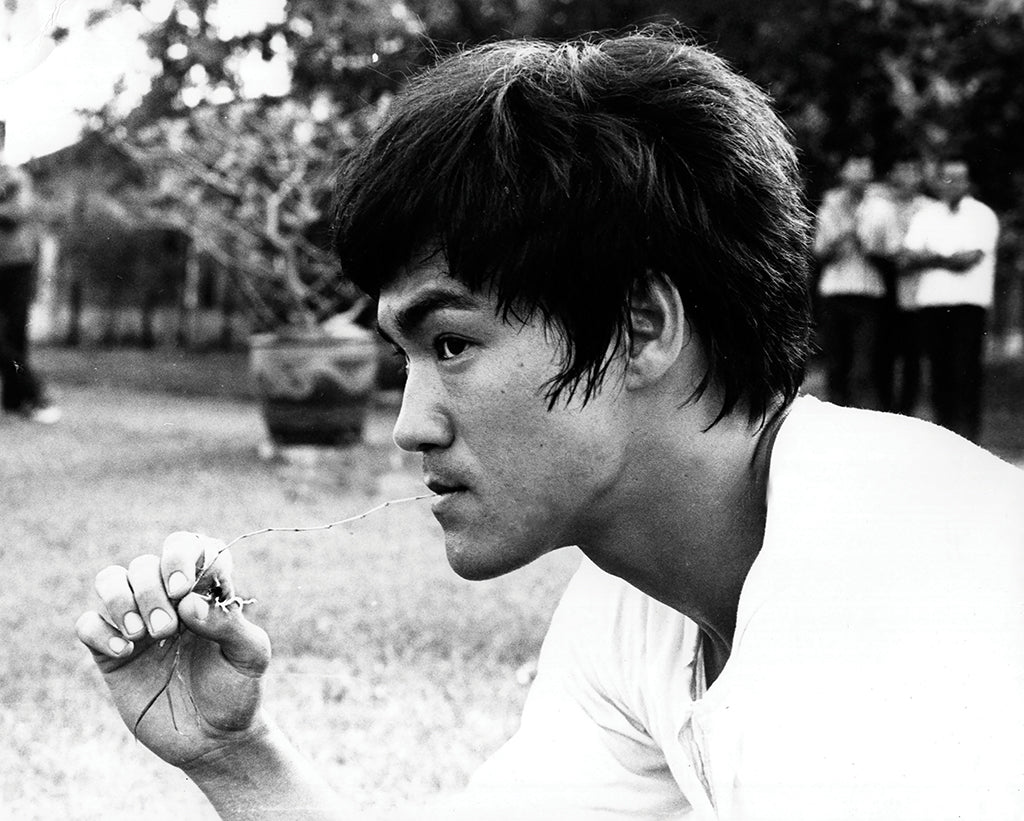
“Life is never stagnation. It is constant movement, movement without rhythm, for we are constantly changing. Things live by moving and gain strength as they do so.”
— Bruce Lee
One of the aspects that started me on this magnificent path with the Movement was to recognize the serious impact of our contemporary lifestyle. And I am not only referring to the physical after-effects, obvious to the eye, but also to the repercussions on the totality of our Being.
I was able to experience firsthand the harsh reality of how our current relationship with physical activity, often seen more as a burden than as a joyful and natural expression of the Self, encourages unhealthy or unhealthy behavior.
And the consequences were more than clear. I became more and more rigid and limited. Fatigue took hold of me while pains appeared and distanced me from any kind of wellbeing (physical, mental or spiritual).
All this ended up affecting how I related to my environment and my inner self; separating me from my capabilities, my development and my Being.
Luckily, I found some impetus to get out of the sedentary lifestyle with climbing (and a little crossfit/calisthenics). Even though my movement in this discipline was quite poor, I stuck to it like a lizard to its rock.
I spent some time developing, getting to know myself and growing with this sport, starting to connect with deeper aspects than the activity itself suggested. It was a path of self-discovery, where each grip and each ascent became an intimate dialogue with my essence.
However, I ended up hitting a ceiling; and not precisely because I was a good climber. While it is true that I recovered some of my abilities, I was still finding limits in my expression with movement.
I was improving, yes, but I still faced countless shortcomings (physical and mental) that I didn’t understand and that kept me from the meaning I longed for. I was “moving” in a direction that did not address the root of the problem: my relationship with physical activity.
It was then that I came across the practice of Movement, a perspective that allowed me to explore and rediscover my Self in a completely new way. As if I had opened the door to an unknown universe full of possibilities.
But, what is the Movement?
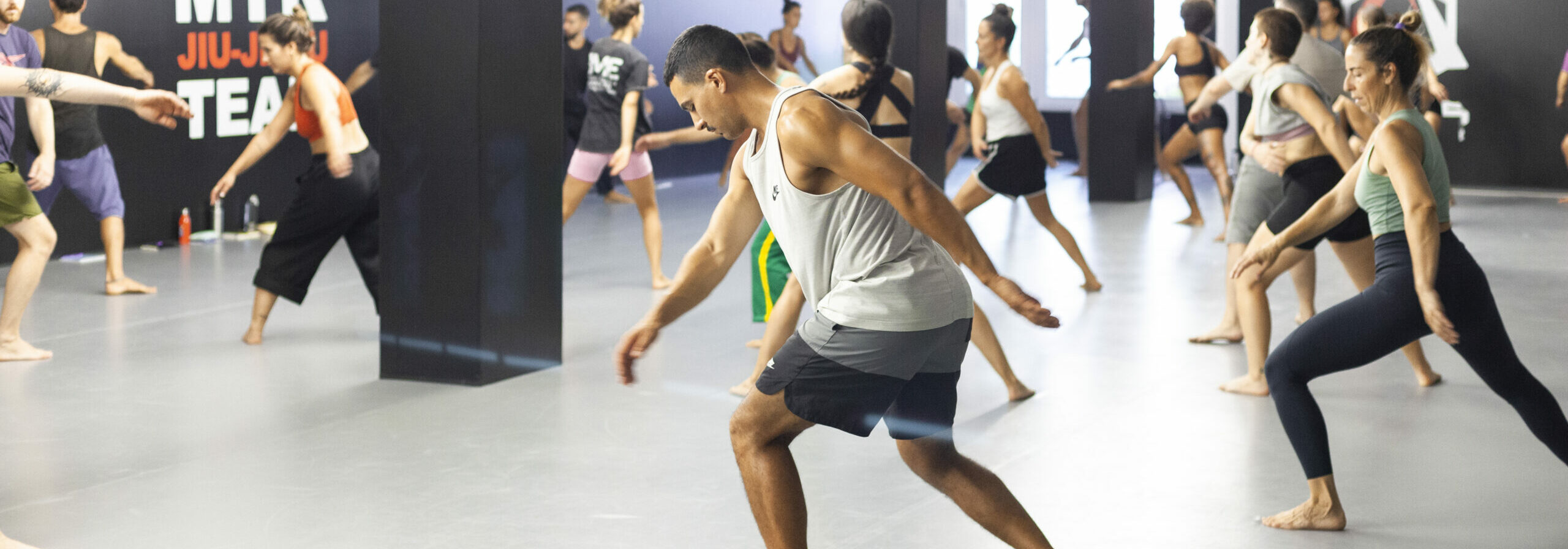
This question, which I have been asked countless times, does not find an easy answer. When we look at Movement, we are confronted with a broad, abstract concept that cannot be captured in clear or precise definitions. In fact, its beauty lies in its changing nature, in how its meaning transforms as we move along the path.
For the true qualities of the Movement can only be known through direct experience, requiring us to be fully aware in order to understand them. This keeps us ever vigilant, with a beginner’s mind, open to the impermanence of all things and reminding us of the true essence of life.
However, despite being an ineffable concept, I am going to try to address this dilemma to have a first map to guide the beginning of your journey. Even so, do not stick to this theoretical explanation, as it becomes an incomplete and closed definition. As Alfred Korzybski rightly said: the map is not the territory. Do not cling to it or limit yourself to it.
1. Let’s start at the beginning and deconstruct
I firmly believe that the way physical activity is currently understood and practiced is fundamentally flawed, both in approach (“why” we move) and execution (“how” we move). This perspective, which unfortunately is the prevailing one in the contemporary world, is not only failing in the result, with consequences such as high rates of sedentary lifestyles or body imbalances caused by the limited approaches of traditional sport and fitness; but it also loses sight of the essence of human movement in its purest and most expressive form.
What is known today as physical education (here I include sport, fitness, etc.) is an edifice in ruins; sustained by obsolete pillars that prioritize premature specialization, short-term performance and a narrow vision of what it means to be ‘fit’.
We find ourselves in an era where the quantification of exercise – how many calories we burn, how many miles we run, how much weight we lift – has eclipsed the quality and purpose of movement. We have lost the connection to the playful, exploratory aspect that is vital to our physical and mental development. In addition, hyperspecialization in specific sports and physical activities has led their practitioners to an imbalance in bodily, mental and spiritual development that few dare to admit, causing a series of unattractive results: injuries, bodily deficiencies, mental limitations….
The solution to this problem is not simple, as it requires a radical change in our perception and approach to physical activity. We need to tear down that “edifice” to start building one that is based on diversity, understanding of the body and the connection between mind and movement. An approach that celebrates exploration, adaptability and creativity, and recognizes the importance of Movement in all its forms.
The “why” and “how” we move need to be reconsidered in order to erect a temple that honors us. Let’s start with the first brick.
2. The Movement Practice
Having this blank canvas, we can begin to draw and define what Movement and its practice (physical activity) consists of.
Movement is the only way to interact with our internal environment.
It is the unique way to relate to those around us, because any act of communication involves some movement; from breathing and blood circulation to the actions of the nervous system.
There is no option to choose whether to move or not, but we do have the opportunity to be conscious and choose how we do it. This invites us to be responsible for that movement; for the decisions we make will be the directions it takes, influencing everything we do. I would dare to say that our awareness of this fact is crucial to take, in a way, the reins of our life.
That’s where it all begins. That is where the practice of movement begins.
The practice of Movement is a paradigm shift with respect to physical activity that advocates a more holistic and generalist approach than traditional views on the subject. It goes far beyond exercise for aesthetic or performance reasons, and focuses on movement as a fundamental expression of human life.
This new perspective looks at a wide range of disciplines, philosophies, techniques and the link between them to emphasize the importance of moving in functional and varied ways, promoting a deeper and richer understanding of the practitioner’s relationship with the Self and the environment.
It is not simply a series of programmed exercises or a list of movements to achieve, but a continuous process of learning and adaptation, where each step is an opportunity to discover and challenge our own limitations.

Movement as a philosophy and expression of life
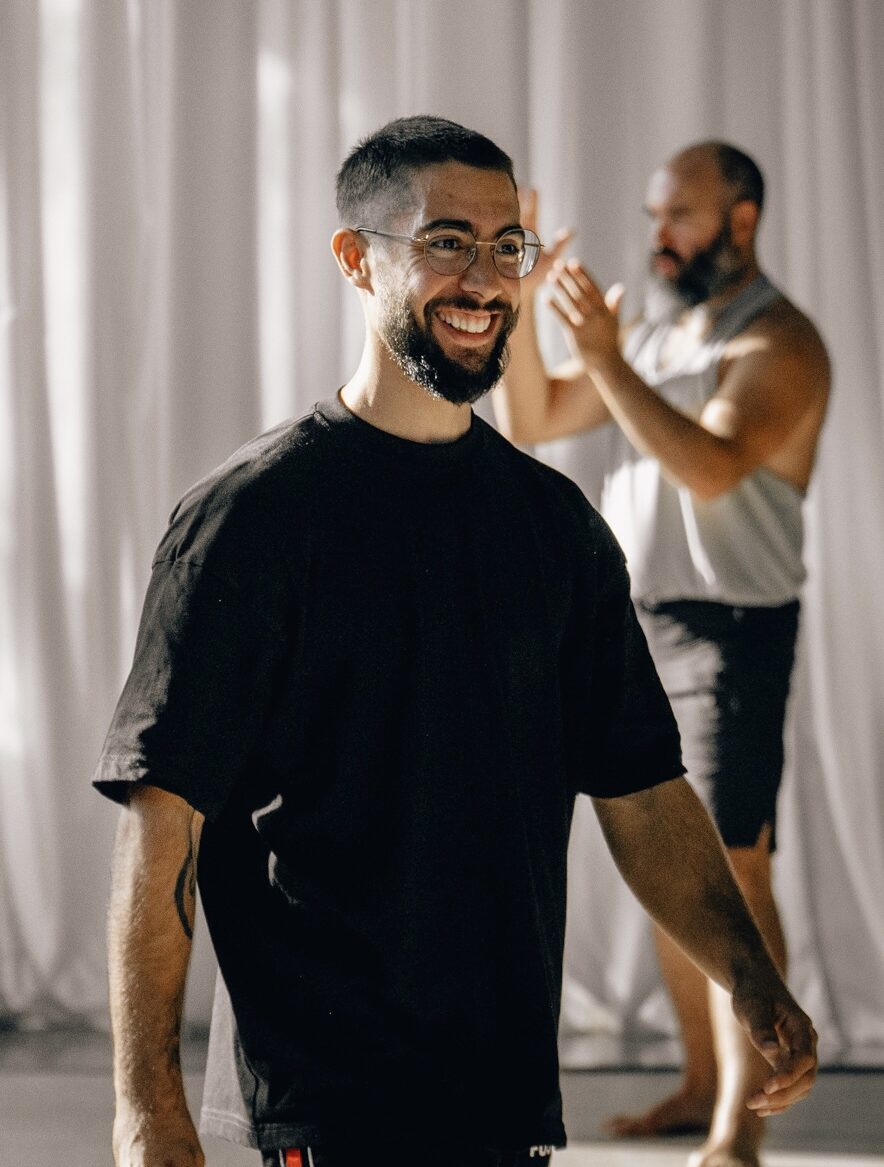
Thank you,
Eric Imbernon